
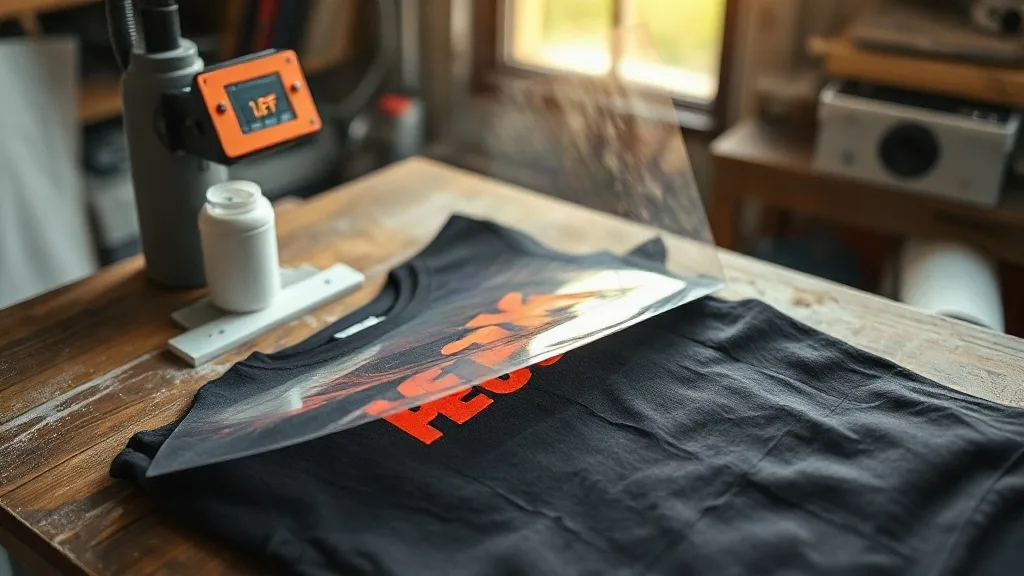
Walk into any small print shop in Houston and you will notice the same shift: heat presses that used to run plastisol all day are now cycling through film. The reason is simple. dtf transfers let a shop decorate cotton, polyester, blends, and even nylon without keeping a dozen screen setups on the shelf, and without the minimums that make small orders painful. For a city full of custom tee businesses, school spirit shops, and weekend market vendors, that flexibility is the whole game.
This guide is for the people actually standing behind the press. It covers what a dtf transfers sheet really is, how to judge quality before you buy a hundred of them, what to look for when you search for dtf transfers near me, and the press settings that separate a print that survives fifty washes from one that peels on the first.
What Actually Happens Inside a DTF Transfer
Direct-to-film printing is a three-layer sandwich. First, a printer lays down water-based pigment ink onto a coated PET film in reverse, so the image reads correctly once it is flipped onto fabric. Then a powder adhesive, usually a thermoplastic polyurethane, is dusted over the wet ink and melted in. That powder is what bonds the ink to the garment, and it is the single biggest quality variable in the whole process.
When you press the transfer, the adhesive melts into the fabric fibers while the ink softens just enough to grip. Peel the film cold and the image stays behind on the shirt. There is no screen, no emulsion, no reclaim tank, and no color separation work. That is why a shop can take a one-off order for a family reunion on Tuesday and a fifty-piece run for a youth soccer team on Wednesday without rewriting its production schedule.
Why the Powder Layer Decides Everything
A cheap transfer can look perfect on the transfer sheet and still fail on the shirt. If the adhesive powder is applied too thin, the ink sits on top of the fibers instead of locking into them, and the edges start lifting after a few laundry cycles. If it is applied too heavy, the print feels rubbery and the fine details in small text blur together.
Run your thumb across a sample sheet before committing to a bulk order. A well-made transfer feels slightly tacky and evenly textured, not gritty in patches. Hold it up to a light: pinholes in the powder show up as bright specks and tell you the coating was inconsistent.
Judging Print Quality Before You Buy
The film itself matters as much as the ink. A good PET base stays flat through the print and press cycle. Cheap film curls at the corners the moment it comes off the roll, which causes the transfer to shift under the press and produces a ghosted edge that no amount of re-pressing will fix.
Here is the checklist I run through with any new dtf supplier before placing a real order:
- Edge sharpness. Print a line of six-point text. If the letters close up or fringe, the ink laydown is too heavy or the resolution is too low.
- Color accuracy on dark fabric. Whites and pastels are the honest test. A white that turns gray on a black tee means the ink layer is too thin.
- Stretch recovery. Press a sample onto a cotton-poly blend, stretch it firmly, and release. Cracking that does not close back up is a wear problem waiting to happen.
- Peel behavior. The film should release cleanly and completely with no ink left clinging to it.
- Consistency across the sheet. Cut the same design from the center and the corner of a roll. They should press identically.
Ask for a sample pack rather than a single sheet. One transfer tells you what the best case looks like. Five tell you whether the supplier can repeat it.
Sourcing in Houston: What Local Actually Buys You
Shipping a roll of film from a warehouse three states away works fine until a job needs to go out Friday and the courier misses the pickup. That is the moment local sourcing stops being a nice-to-have. When you search for dtf transfers near me, you are really shopping for three things: turnaround time you can plan around, a person who answers the phone, and the ability to walk in with a problem shirt and walk out with an answer.
Houston has a real advantage here because the city's apparel infrastructure is dense. Blank suppliers, embroiderers, and transfer producers cluster around the same warehouse districts, which means a shop in the Heights can restock the same afternoon it runs low. A few practical points to confirm before you commit:
- Ask how gang sheets are priced. Most local producers charge by the sheet rather than by the design, which changes the math completely for small multi-design orders.
- Confirm the maximum print width. If you run oversized back prints, a producer capped at twelve inches will not work for you.
- Ask about same-day cutoff times and whether that includes powdering and curing, not just printing.
- Find out what happens with a bad sheet. A supplier who replaces a flawed transfer without argument is worth a few cents more per sheet.
Press Settings That Actually Hold Up
Most failed DTF prints are not the transfer's fault. They are a pressure or temperature problem. The numbers below are a solid starting point, but always dial them in against your own press, because platen condition and shirt thickness both move the result.
Temperature and Time
Cotton typically presses well around 300 to 320 degrees Fahrenheit for ten to fifteen seconds. Polyester wants less heat, closer to 280 to 300 degrees, because the fiber itself will glaze or shrink under too much direct heat. Pre-press the garment for three to five seconds first to steam out moisture. Trapped moisture is the most common cause of a print that looks fine on the platen and blisters after the first wash.
Pressure and Peel
Medium pressure is usually right. Too little and the adhesive never reaches the fibers. Too much and the ink spreads, softening fine detail. Peel cold, always. Pulling a DTF transfer hot stretches the adhesive while it is still fluid and leaves a matte, wrinkled surface that never fully recovers.
After peeling, a second press of five to eight seconds with a cover sheet improves wash durability noticeably. It is a small extra step that pays for itself in fewer complaints.
Care Instructions Worth Printing on the Tag
Give customers real guidance and your return rate drops. Wash inside out in cold water. Skip fabric softener, which coats the print and breaks down the adhesive over time. Tumble dry low or hang dry. No ironing directly on the image, and no dry cleaning on anything with a large print area.
These are not arbitrary rules. Heat and mechanical agitation are what wear down any heat-applied graphic, and cold washing with low drying removes most of both.
Frequently Asked Questions
Can DTF transfers go on 100% polyester athletic wear?
Yes, and it is one of the strongest use cases. Lower the press temperature to roughly 280 to 300 degrees and keep the time on the shorter end. Polyester dyes can migrate into the ink over time on dark garments, so a slightly thicker ink layer or a dye-blocking underbase helps on deep navy, red, and black fabrics.
How long should a DTF print last?
With correct pressing and cold washing, most quality transfers hold up for fifty or more wash cycles before showing meaningful fading or edge wear. The two things that shorten that most are washing in hot water and drying on high heat.
Do I need a special printer to make my own transfers?
You need a printer designed for DTF pigment ink plus a powder shaker and a curing oven. The equipment cost is real, and the learning curve around powder coverage is steeper than most people expect. For shops running under a few hundred pieces a week, buying finished transfers from a local producer is usually cheaper than bringing the process in-house.
What is a gang sheet and why does it matter for pricing?
A gang sheet packs multiple designs onto one large film sheet so you pay for the sheet rather than per design. If you sell a lot of small chest logos, building a gang sheet with twenty or thirty pieces on it can cut your per-print cost dramatically compared with ordering each design separately.
How should I store transfers I am not using right away?
Keep them flat, dry, and out of direct sunlight. Stack them with the film side facing the powder side and avoid anything heavy on top, since creased film presses into a visible line. Most transfers stay usable for several months when stored this way.